
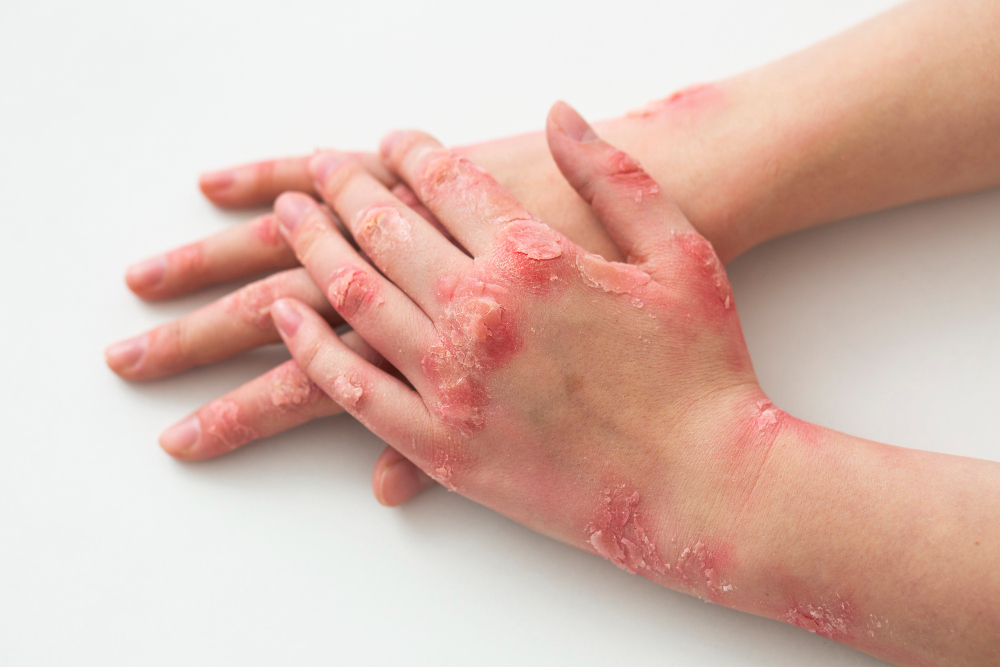
What is Psoriasis?
Psoriasis is a chronic skin condition that causes red, scaly patches on the skin. These patches can appear anywhere, but they often show up on the elbows, knees, scalp, and lower back. Although it is not contagious, psoriasis can affect your daily life. Many people find that symptoms come and go. According to the World Health Organization (WHO), millions of people worldwide live with psoriasis. Because it is a long-term condition, managing symptoms is important for comfort and confidence.
Common Symptoms of Psoriasis
Psoriasis symptoms can vary from person to person. However, some signs are more common than others. For example, you may notice:
Sometimes, symptoms get worse during certain times, called flare-ups. On the other hand, you may have periods when symptoms improve or disappear.
Causes and Risk Factors
While the exact cause of psoriasis is not fully understood, experts believe it is related to the immune system. In people with psoriasis, the immune system attacks healthy skin cells by mistake. This causes skin cells to grow too quickly, leading to thick patches. Several factors can increase your risk, such as:
Although anyone can get psoriasis, it often starts between ages 15 and 35. Still, it can develop at any age.
How Psoriasis is Diagnosed
Doctors usually diagnose psoriasis by looking at your skin. Because other skin conditions can look similar, your doctor may ask about your symptoms and family history. Sometimes, a small sample of skin (biopsy) is taken for testing. This helps rule out other problems. Early diagnosis can help you start treatment sooner and manage symptoms better.
Treatment Options for Psoriasis
There is no cure for psoriasis, but many treatments can help control symptoms. Your doctor will suggest the best option based on your needs. Common psoriasis treatment options include:
In addition, your doctor may recommend a mix of treatments for better results. According to the Centers for Disease Control and Prevention (CDC), following your treatment plan is key to managing psoriasis.
Lifestyle Tips and Prevention
While you cannot always prevent psoriasis, certain lifestyle changes can help reduce flare-ups. For instance, you can:
Because triggers are different for everyone, it helps to track your symptoms and notice what makes them worse.
When to See a Dermatologist
If you notice red, scaly patches that do not go away, it is time to see a dermatologist. Also, if your symptoms get worse or affect your daily life, seek help. Early treatment can prevent complications and improve your comfort. Remember, a dermatologist can create a personalized plan for your skin care for psoriasis.
In summary, psoriasis is a chronic skin condition that needs ongoing care. If you think you may have psoriasis or want better control of your symptoms, consult a dermatologist at Pravalika’s Skin Hair and Aesthetic Clinic for personalized advice.