
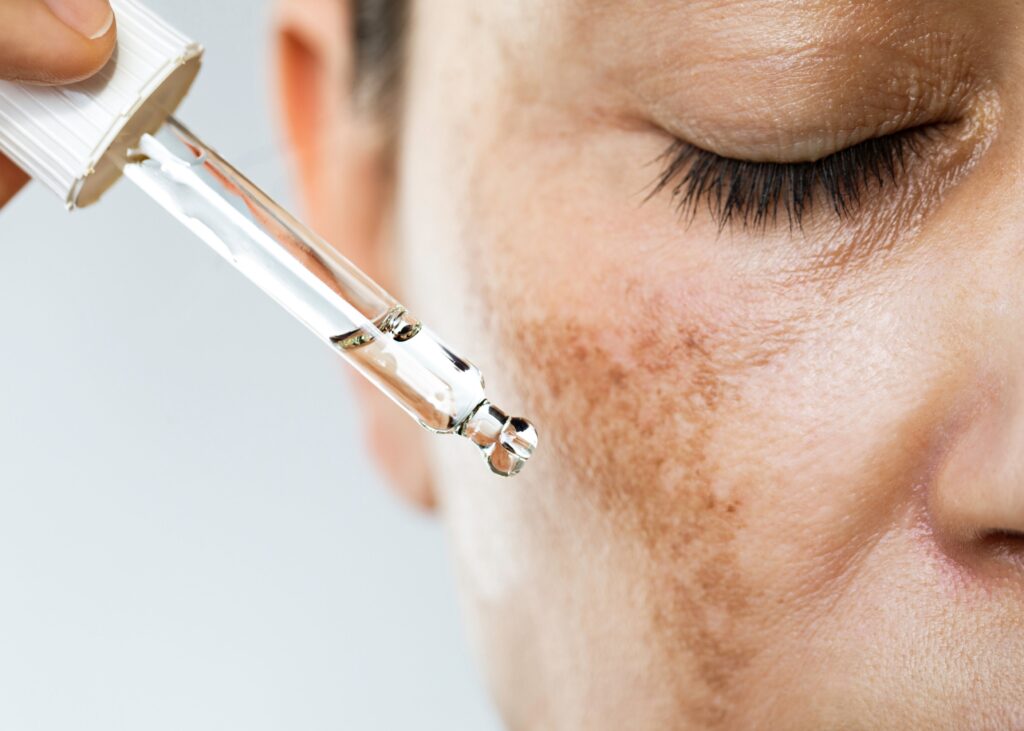
What is Melasma?
Melasma is a common skin condition. It causes dark, brown, or gray patches on the skin. Usually, these patches appear on the face, especially the cheeks, forehead, and upper lip. Because melasma often results from hormonal changes, it is called deep hormonal pigmentation. Many people notice melasma during pregnancy or after starting birth control pills. However, both men and women can develop melasma.
Common Symptoms of Melasma
Melasma shows up as flat, dark patches on the skin. These patches are usually painless. However, they can cause emotional distress. For example, some people feel self-conscious about their appearance. Common symptoms include:
Although melasma does not hurt or itch, it can be stubborn and hard to treat.
Causes and Risk Factors
Melasma is often linked to hormonal changes. For instance, pregnancy, birth control pills, or hormone therapy can trigger melasma. Sun exposure is another major cause. Ultraviolet (UV) rays can make melasma worse. In addition, people with darker skin tones are more likely to get melasma. Other risk factors include:
Because hormones play a big role, melasma is sometimes called the “mask of pregnancy.”
How Melasma is Diagnosed
Doctors usually diagnose melasma by looking at your skin. Sometimes, they use a special light called a Wood’s lamp. This helps them see how deep the pigmentation goes. In rare cases, a skin biopsy may be needed. However, most of the time, a visual exam is enough. If you notice new or changing patches, it is wise to see a dermatologist.
Effective Treatments for Deep Hormonal Pigmentation
Treating melasma can take time. Because the pigmentation is deep and linked to hormones, it may not go away completely. Yet, many treatments can help lighten the patches. Some common options include:
According to the American Academy of Dermatology, combining treatments often works best. However, always follow your doctor’s advice. Some treatments may not suit everyone.
Lifestyle Tips and Prevention
While melasma can be stubborn, some lifestyle changes may help prevent or manage it. For example, you can:
Because sun exposure is a key trigger, protecting your skin is very important.
When to See a Dermatologist
If you notice new dark patches or your melasma is getting worse, it is time to see a dermatologist. Early treatment can help prevent the patches from spreading. In addition, a dermatologist can suggest the best treatment plan for your skin type. If over-the-counter creams do not help, or if you feel upset about your skin, professional advice is important.
Conclusion
Melasma is a common skin condition caused by deep hormonal pigmentation. While it can be persistent, a combination of medical treatments and lifestyle adjustments can help improve skin tone and reduce pigmentation over time.
For safe and effective results, consult Dr. Pravalika for expert dermatological care and personalized treatment plans for melasma tailored to your skin type and condition.