
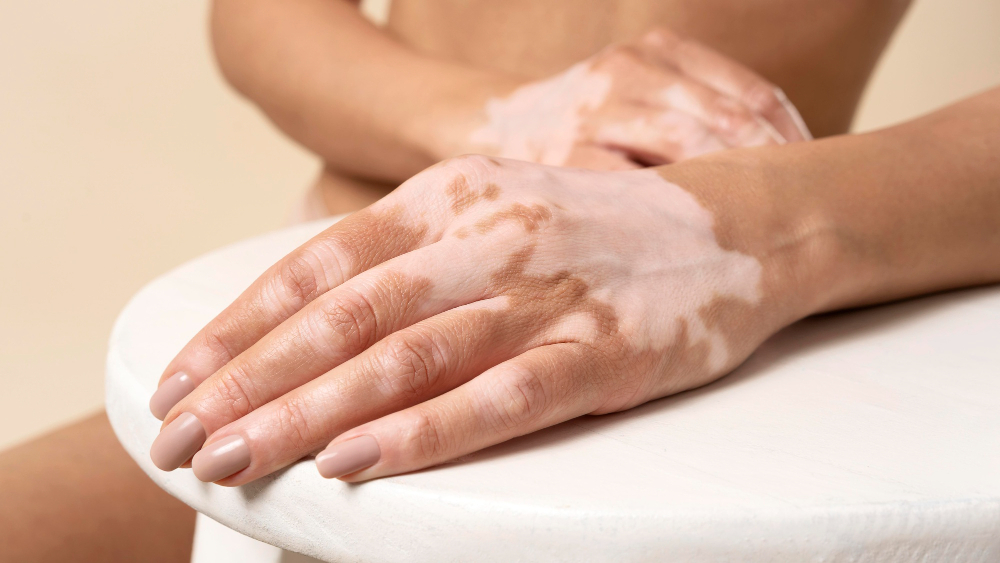
What is Vitiligo?
Vitiligo is a skin condition that causes white patches to appear on the skin. These patches happen when the cells that give skin its color stop working. While vitiligo is not harmful, it can affect how people feel about their appearance. Because it can appear anywhere on the body, many people look for ways to manage it at home. Understanding vitiligo is the first step to caring for your skin.
Why Self-care Matters in Vitiligo Management
Self-care is important for people with vitiligo. Although there is no cure, good self-care can help protect your skin and boost your confidence. In addition, following a daily routine can make your skin feel healthier. For many, managing vitiligo at home gives a sense of control. Also, self-care may help prevent new patches from forming or spreading.
Top Self-care Tips to Treat Vitiligo
Here are some simple self-care tips to treat vitiligo and support your skin health:
Lifestyle and Daily Habits for Healthy Skin
Besides daily skin care, healthy habits can support your overall well-being. For example, eating a balanced diet with fruits and vegetables helps your skin stay strong. Drinking enough water keeps your skin hydrated. Also, regular exercise can improve your mood and health. In some areas, pollution or harsh weather may affect your skin, so adjust your routine as needed. Above all, gentle care is key.
Emotional Well-being and Support
Living with vitiligo can sometimes affect your emotions. However, you are not alone. Many people feel worried or sad about changes in their skin. Talking to friends or family can help. Joining support groups, either in person or online, can also provide comfort. If you feel very upset, consider speaking with a counselor. Remember, your feelings are important, and support is available.
When to Seek Medical Advice
While self-care is helpful, sometimes you need a doctor’s advice. For instance, if you notice new patches or your skin feels painful, see a dermatologist. Also, if home care does not help or you feel unsure about your routine, a doctor can guide you. Early advice can prevent problems and help you feel more confident about your care.
For detailed guidance on vitiligo care, you can refer to reputable dermatology sources. For personalized treatment and management, consult Dr Pravalika at Pravalika’s Skin, Hair & Aesthetic Clinic.